FROM FIRST BILL
TO POST-INSTALL VERIFICATION.
This is the actual shape of a well-run solar project: gather the right data, understand the household, size the system carefully, review the contract, move through design and approvals, install cleanly, and then verify the result with real bills.
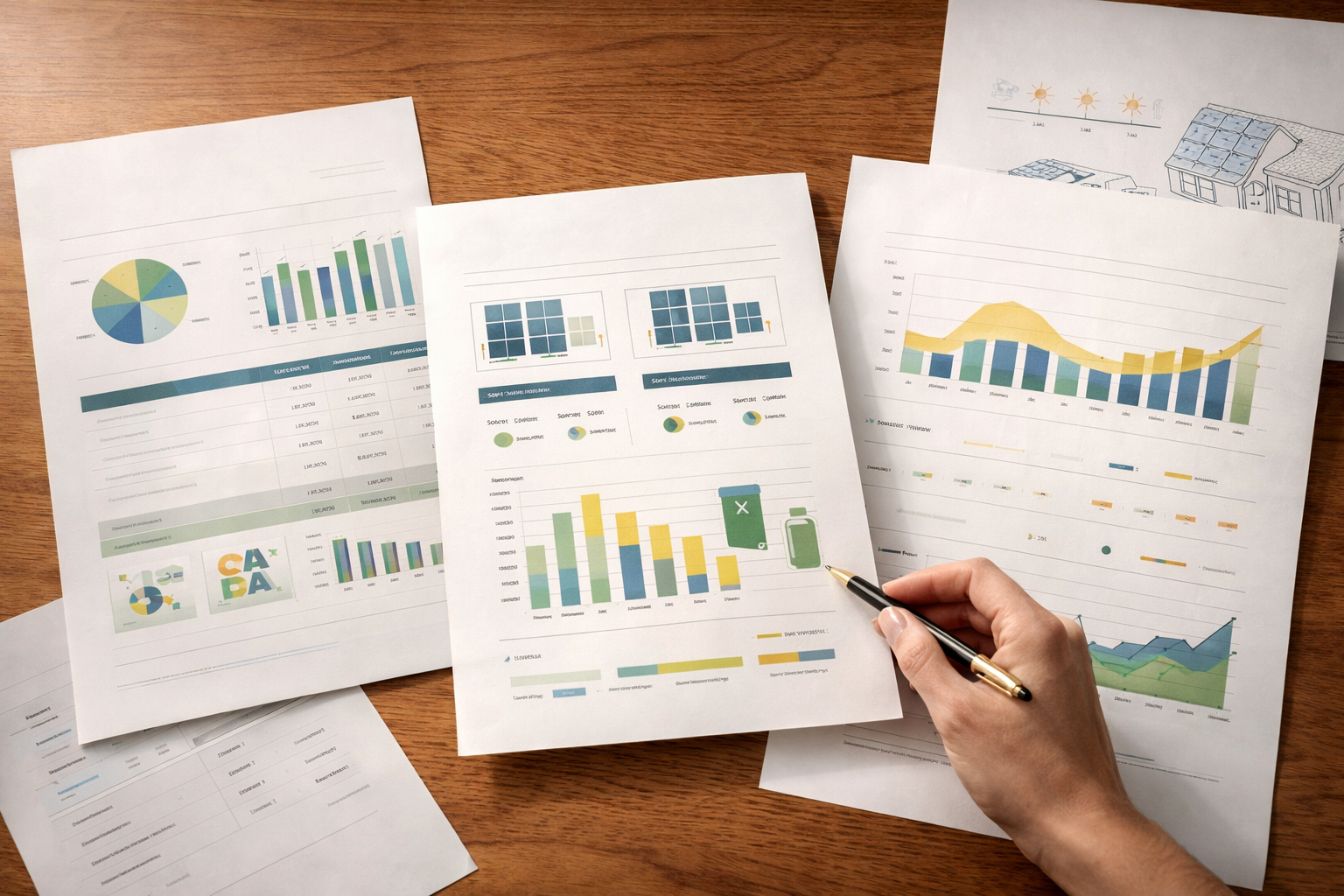
Start With The Bill And, If Possible, Green Button Data
The process starts with the utility bill. If Green Button interval data is available, it gives a much clearer picture of how the home actually uses electricity across the year and throughout the day.
Review Large Loads, Habits, And What Could Change
After the data comes the conversation. Large electrical loads, unnecessary usage, EV charging timing, and upcoming lifestyle changes all affect whether the system should be smaller, larger, phased, or handled differently.
Match Solar And Battery To Real Seasonal Behavior
A useful recommendation has to consider which season matters most, how much solar the roof can produce in summer versus winter, and how daytime production lines up with nighttime demand before battery capacity is chosen.
Adjust The Recommendation To The Real Installation Conditions
Two homes with the same bill can still need different pricing. Roof layout, installation difficulty, equipment location, shade, noise concerns, and electrical-panel capacity all affect the actual project scope.
Read Quotes And Contracts Before Signing Anything
Only after the scope is clear should the contract come out. Every clause, assumption, price adjustment, and potential trap needs to be understood before anything is signed.
Move Into Design, Customer Review, And Permit Submission
After signing and deposit, the project moves into formal design. The customer reviews the system layout first, then the package goes to city review while any HOA approval runs in parallel.
Install, Inspect, And Complete Interconnection
Once city approval is in place, installation can move forward. After installation, inspection and utility interconnection finish the formal process, while battery-backed California systems can often begin useful operation earlier.
Track New Bills And Compare The Result To The Plan
Installation is not the end of the real process. New utility bills and usage patterns need to be checked against the earlier forecast, and any mismatch should lead to another conversation about what changed and whether anything needs adjustment.