If Your Bill Is Only $150 a Month, Is Solar Still Worth It?
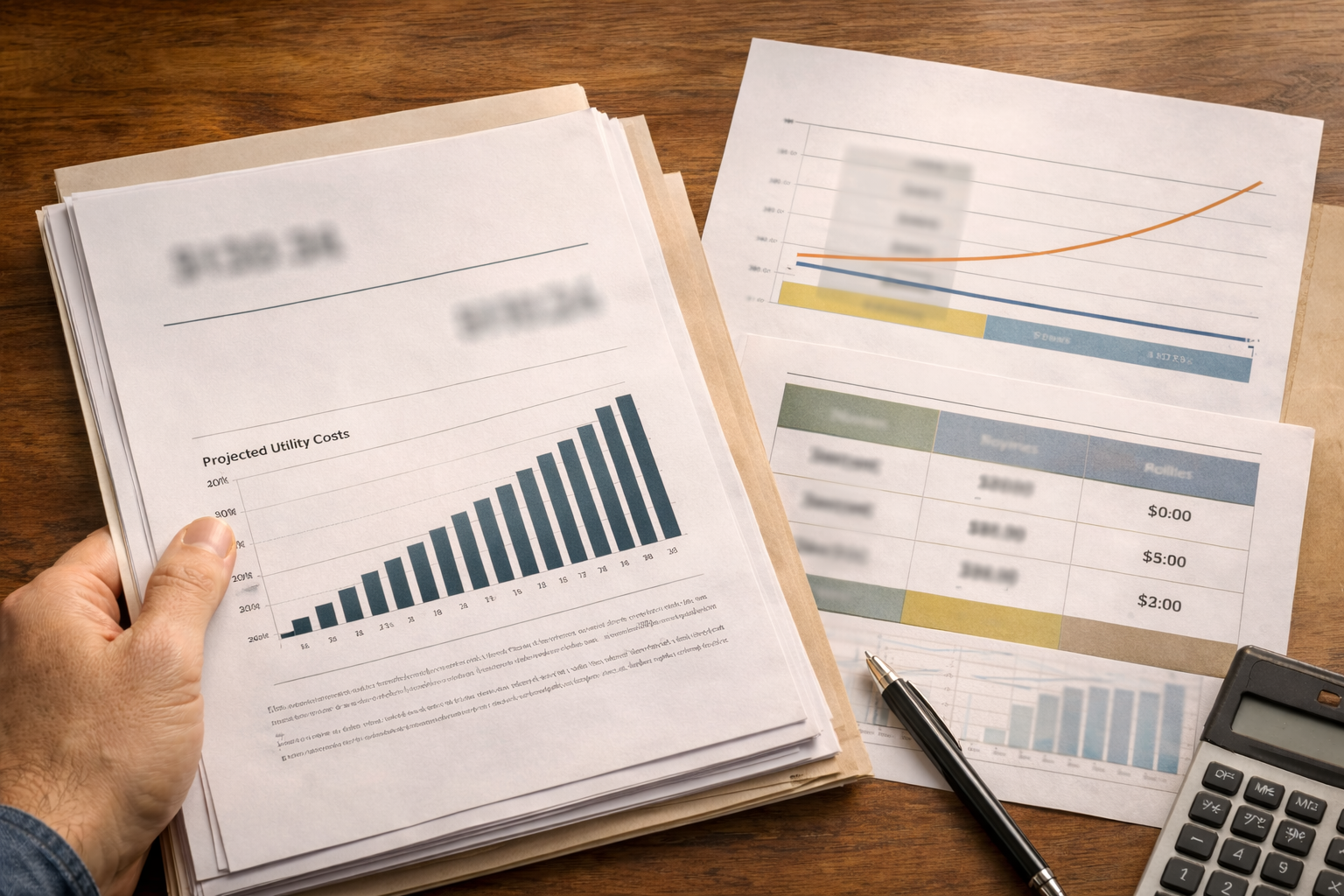
A $150 monthly bill does not automatically mean solar is a weak investment, especially in California where long-term utility inflation changes the math dramatically.
Many homeowners look at a current bill of around $150 a month and assume solar cannot be worth it. That sounds intuitive, but the conclusion often changes once the math is projected forward instead of being judged only by today’s payment.
Take a conservative California example. Assume the household uses only 50% more electricity ten years from now, and assume utility pricing behaves roughly like it did over the past decade and doubles over that period. On that path, the ten-year utility cost can reach about $36,000.
Now compare that with a solar path. Suppose a system large enough for that usage profile costs about $18,000 after the 2026 federal tax credit structure is applied. Under NEM 3.0, the homeowner will still buy some electricity from the grid and still pay base charges, so assume roughly $40 a month in remaining utility cost, or about $4,800 across ten years.
That puts the ten-year total around $22,800 instead of $36,000. In other words, the homeowner saves about $13,000 over ten years while also ending up with the system itself. That is roughly $1,300 a year in avoided cost, and it can work out to an annual return around 7%, which is stronger than many low-risk passive options.
Stretch the horizon to the full life of the system and the picture becomes much stronger. Over twenty-five years, with the same basic logic on usage growth and utility inflation, the return can become many times the original investment. The lesson is simple: a modest bill does not automatically mean solar is too small to matter. The real answer comes from long-term economics, not from one month’s payment alone.